Lesson 12 of 157 min read
Keeping customers: billing, messages, winter and win-backs
How bin cleaners keep customers: card-on-file billing, failed-card retries, texts that prevent missed bins, winter pauses, win-backs, upsells and texting rules.
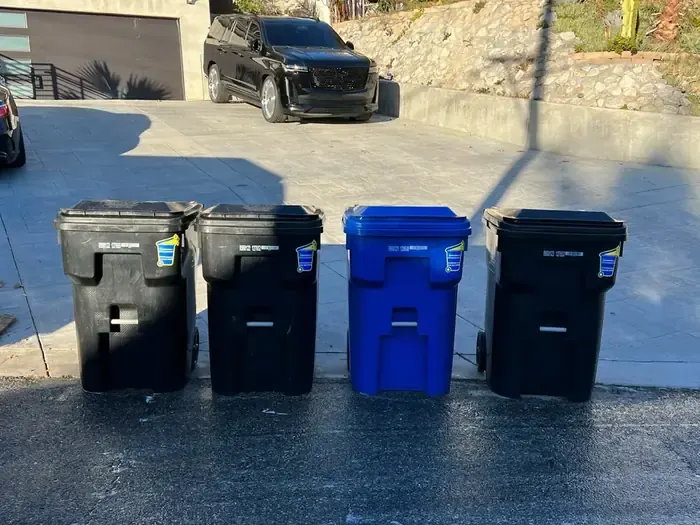
Bin cleaning is a subscription business. A customer who stays four years is worth about four times one who leaves after one, so keeping customers matters as much as winning them (Lesson 7). Most of what costs bin cleaners money isn’t the cleaning. It’s the leaks: failed cards, carts that weren’t out, winter cancellations, and one-time customers who never come back.
Bill like a subscription
- Save the card at sign-up and charge it automatically. Some companies charge after each cleaning is done, which makes saying yes easy; others charge on a schedule.
- Offer a prepaid year at a discount. 14% of the bin cleaning sites we read offer one; Ameri-CANZ takes 20% off for paying a year up front. Prepaid customers don’t cancel in month two, and the cash helps in winter.
- Know your card costs. Standard card processing is 2.9% plus 30 cents a charge; bank (ACH) payments are 0.8%, capped at $5 (Stripe).
When cards fail
Cards expire, hit limits and get replaced. One secondary source puts the average failed-payment rate for subscriptions at about 8%, and says businesses recover 40% to 60% of those payments. Two things do the recovering:
- Automatic retries. Stripe’s recommended default retries a failed payment up to 8 times within 2 weeks, at the times most likely to work. Lost or stolen cards (“hard declines”) need a new card (Stripe).
- A card-update link texted and emailed to the customer at the first failure, and again with each retry.
Failed cards, retried for you
Example from Clean Bin System: unpaid balances by how late they are, with each card’s next retry.
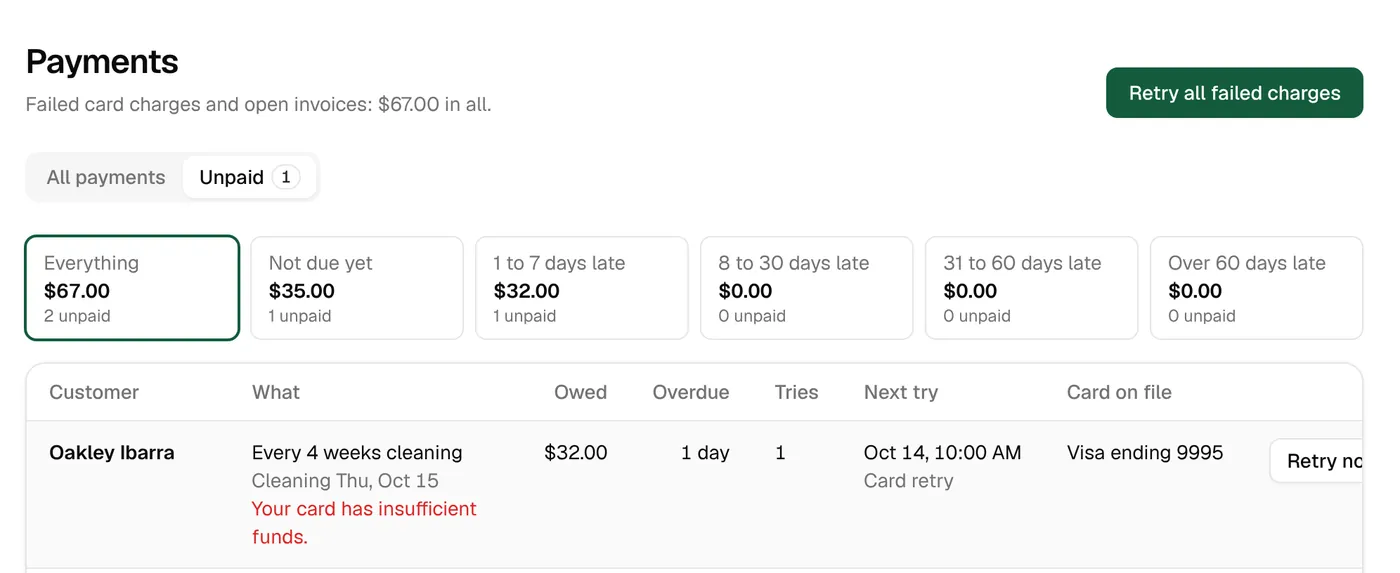
BinClean Marketing’s guides count failed-card reminders among the two automations that pay for themselves fastest. Set them up before your first customer, not after your first hundred.
The messages that keep customers
| Message | When | Why |
|---|---|---|
| Welcome, with the first cleaning date | Within a day of sign-up | Sets expectations |
| Reminder | The day before, or the morning of | Gets carts left out |
| On the way | As you head to the stop | Shows you’re coming |
| Done, with a photo | Right after the stop | Proof, plus a review and referral link |
| Problem notice | Right after the stop | Cart not out, blocked or not empty, with a photo |
| Receipt | After the charge | Fewer billing questions |
| Holiday or weather move | As soon as you know | Customers know their new day |
| Failed card | At the failure and each retry | Recovers the payment |
| Win-back | 75 days after a one-time clean | Brings one-time customers back |
The reminder does the most work. The Bin Trash Spa in Reno credits its day-before text with getting bins left out (FAQ), and The Trash Can Cleaners in San Antonio says reminders mean customers who are away can reschedule instead of being charged for a missed cleaning.
Set up texting early. Business texts need a registered number, and carriers block unregistered ones. Approval can take a few business days to two weeks, so start before your first route.
Let customers skip, move and pause
- Self-service. Let customers block dates, skip a cleaning or move it themselves in an account page. Several bin cleaners and most bin cleaning software offer this.
- Pause instead of cancel. Bin Scrub offers a “temporary vacation pause”; TriStar lets customers pick the months to skip. A paused customer comes back; a canceled one rarely does.
- Be honest about rescheduling. Routes set the dates, so a moved cleaning may land on the next pass. Say so.
Complaints and refunds
- Photos settle most complaints. Before and after photos answer “you didn’t clean it” and “you cracked it.”
- Re-clean first. A simple promise: if a customer reports a problem with a photo within 24 hours, you re-clean it free on the next pass. Refund only when you can’t re-clean.
- Refund to the card or as account credit. Credit that applies to the next cleaning keeps the customer.
- Early-cancel fees are common: $75 at The Bin Men, the one-time price difference capped at $75 a bin at Fresh Bins LA, $20 before a year at The Bin Trash Spa. If you charge one, put it in writing at checkout (Lesson 6).
Winter
Demand peaks in summer, when carts smell, and slows from about November to February. In the North, many companies stop:
- MetroWash (Minnesota) runs from about mid-April to mid-September.
- Magic Bin Cleaners (Connecticut) runs April 15 to October, pauses billing for the winter, and rolls unused cleanings over to spring.
- Clean Bin Pro (Michigan) shuts down December 1 to March 31.
- Bin Bros KC (Kansas City) moves January and February cleanings to December and March, “when bins actually need them.”
How to handle the slow months:
- Pause billing for the months you don’t clean, and say so at sign-up.
- Sell prepaid years and gift cards. 20 of the 84 bin cleaner sites we read sell gift cards, often as holiday gifts.
- Keep commercial work going. Dumpster pads and HOA common areas don’t stop in winter (Lesson 13).
- Mark your Google profile temporarily closed if you shut down completely.
Win-backs
One-time customers are your easiest next sale. Fresh Bins LA sends an automatic text and email 75 days after a one-time cleaning, “right when the smell is coming back,” inviting them to book again. A win-back text is marketing, so it needs the customer’s written consent to marketing texts (below).
Upsells
- Extra bins. Most homes have two or three carts, and extra bins usually cost $5 to $10 each.
- Up the plan ladder. A quarterly customer who moves to monthly is worth more than twice as much.
- Add-ons: driveway and patio pressure washing, dumpster pads, HOA common areas, and trash valet (rolling carts to and from the curb). The Trash Can Cleaners in San Antonio says emailing customers about pressure washing often books “thousands of extra dollars.”
- Prepaid bundles at a discount.
The rules for texting and email
This is a summary, not legal advice; laws vary by state.
Two kinds of texts. Reminders, on-the-way, done and card notices are service messages. Promotions, win-backs, referral asks and seasonal offers are marketing.
Consent for marketing texts. Federal rules require “prior express written consent” for autodialed marketing texts: a signed agreement, which can be electronic, naming the phone number, authorizing the messages, and saying the customer doesn’t have to agree to buy (47 CFR 64.1200). In practice: an unchecked box at checkout for marketing texts, separate from service texts, that names your business, says what you’ll send, that it isn’t required to buy, that message and data rates may apply, and that HELP and STOP work. Keep a record of when each customer agreed.
Opt-outs. Customers can opt out “by any reasonable method,” and STOP always counts. Honor it within 10 business days.
Hours. Marketing texts are allowed only from 8 am to 9 pm in the customer’s time zone, and Florida and Oklahoma are reported to set 8 pm. Sending between 9 am and 8 pm is a cautious habit; check your state for Sunday and holiday limits too.
State laws. Florida allows damages of $500 or more per violation, and since September 1, 2025, Texas’s telemarketing law covers texts, with a registration and $10,000 deposit unless an exemption applies (a law firm’s summary, Morgan Lewis). If you’re in Texas, check whether the exemption for existing customers fits you.
Carrier registration. Texts from a regular 10-digit number must be registered as a brand and a campaign, or carriers block them. Through Twilio, for example, that’s $4.50 to $46 to register a brand, $15 to vet a campaign and $2 to $10 a month (Twilio). Bin cleaning software usually handles registration for you.
Marketing email (CAN-SPAM): no misleading subject lines, a valid postal address (a P.O. box works), a clear unsubscribe link honored within 10 business days (FTC). Receipts and service emails are mostly exempt.
Key takeaways
- Save cards at sign-up, retry failed payments automatically, and text a card-update link at the first failure.
- A reminder the day before every cleaning helps prevent missed bins.
- Let customers skip, move and pause on their own; a paused customer comes back.
- Plan for winter with billing pauses, prepaid years, gift cards and commercial work.
- Get separate written consent before sending marketing texts, honor STOP, and text between 9 am and 8 pm.
FAQ
How do I keep bin cleaning customers from canceling?
Make the service hard to forget and easy to keep: a reminder before every cleaning, a done text with a photo, self-service skips and vacation pauses, and a quick free re-clean when something’s wrong. Some companies also use short minimums or 12-month agreements, shown clearly at checkout.
What should I do when a customer’s card fails?
Retry it automatically (Stripe’s default is up to 8 tries in 2 weeks) and send the customer a link to update their card at the first failure and with each retry. Lost or stolen cards need a new card, so the link is what recovers those.
Can I text my bin cleaning customers?
Yes. Service texts like reminders, on-the-way and done messages are expected. Marketing texts, like offers and win-backs, need the customer’s separate written consent, a working STOP, and sending hours of 8 am to 9 pm local time or stricter where state law requires. Register your number with the carriers first.
What do bin cleaners do in the winter?
In cold regions many pause from about December to February, often pausing billing too. Others clean less often, sell prepaid annual plans and gift cards, and keep busy with dumpster pads, HOA common areas, pressure washing or snow removal.
How do I get one-time customers to come back?
Send an automatic text and email about 75 days after the cleaning, when the smell is coming back, with a link to book a plan. Since that’s a marketing message, make sure the customer agreed to marketing texts at checkout.